
This year's Ironman Women's World Championship in Kona will be remembered for many things: searing heat, punishing humidity, and a finish line that very few reached in one piece.
But above all, it will be remembered for two of the sport's brightest stars: Lucy Charles-Barclay, 2023 Ironman World Champion, and Taylor Knibb, two-time Olympic silver medallist in the mixed-relay triathlon. Both were leading the race and both were forced to withdraw in the closing stages.
After hours of near-perfect execution, years of preparation, and the eyes of the triathlon world upon them, their bodies simply said no more.
It was heart-breaking, but also deeply educational.
Because it reminded us of something every athlete and coach needs to remember: Performance isn't just about fitness. It's about how physiology, environment, pacing, and decision-making all collide under pressure.
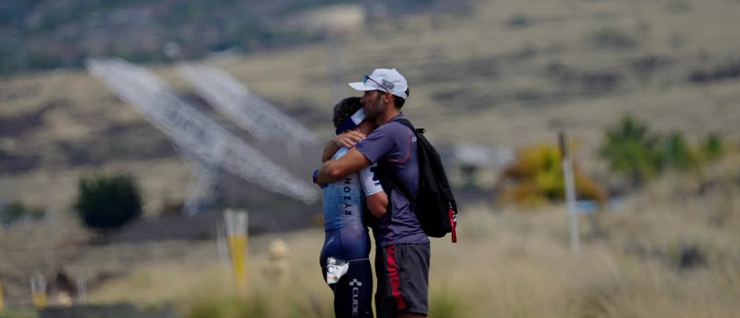
Kona is famous for testing athletes beyond their limits, but this year, the heat index was brutal.
Both Lucy and Taylor were visibly struggling in the final stages, staggering through aid stations, and eventually collapsing from dehydration and heat stress.
Even the most finely tuned, well-prepared bodies have a threshold. Once the internal temperature climbs too high, there's no mental toughness that can override biology.
That's not weakness. It's physiology.
After the race, Lucy Charles-Barclay said she believed she had overdone her pre-race electrolyte intake. She was extremely thirsty after the swim, and despite taking on fluids, she couldn't quench that thirst.
It's a small detail, but such an important one. Even minor deviations in nutrition or hydration can tip the body off balance, especially in heat.
You can't out-tough the environment; you can only prepare intelligently for it. That means heat adaptation, personalised hydration strategies, and practising cooling techniques before race day.
If Lucy Charles-Barclay can be undone by heat and hydration, any of us can.
Both Lucy and Taylor looked brilliant out front. But there's a difference between leading and lasting.
The eventual winner, Solveig Løvseth, didn't lead most of the day. She paced intelligently, absorbed the heat, and ran her own race. When the others faltered, she was still moving forward.
Sometimes, the bravest thing an athlete can do is back off.
We glorify “pushing through,” but the best performances respect the conditions. If the weather turns brutal, your targets need to adapt, or the day will make that decision for you.
One of the hardest parts of coaching and of being an athlete is knowing when to push and when to stop. Lucy didn't quit; she was pulled for her safety. Taylor didn't slow down; her body shut down. That fine line between perseverance and danger is something we don't talk about enough.
Resilience isn't about ignoring warning signs; it's about recognising them early enough to act. That kind of awareness doesn't come from data or heart rate graphs. It's built through honest reflection, communication, and valuing long-term progress over short-term pride.
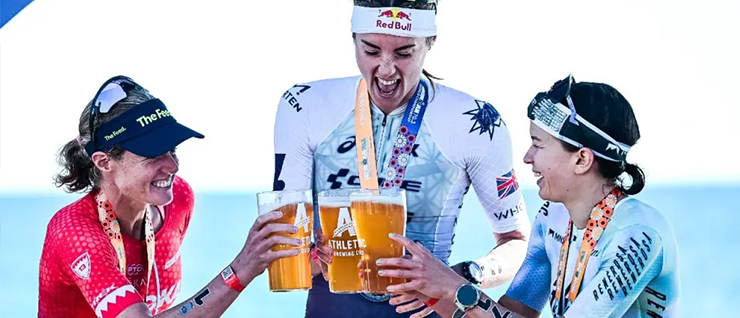
Just weeks after their DNFs in Kona, Taylor Knibb and Lucy Charles-Barclay raced again at the Ironman 70.3 (Half Ironman) World Championship.
They didn't just finish. They came first and second.
That turnaround wasn't luck. It was the product of athletes and coaches who learned, adjusted, and refined. Lucy later admitted that she had thought, after so many years in the sport, that she didn't have anything left to learn, but this experience proved her wrong. She realised she still has things to learn, and always will. That humility is the real hallmark of greatness.
For athletes, it's a crucial reminder: a DNF doesn't define you. It just shows you where your limits were that day and how to push them safely next time.
As coaches, it's easy to get caught up in the data: splits, power, heart rate, lactate. But moments like Kona remind us that athlete success is always context-dependent. Environment. Preparation. Recovery. Fuelling. Pacing. Emotional regulation. They're all part of the same system.
At Ratio Theory, that's what I try to honour: the full picture of performance. Not just what the athlete can do on paper, but what the body will allow on the day.
Because the race isn't won in the first 500 metres. It's won by the athlete who can still cross the line strong at the end.
Lucy Charles-Barclay and Taylor Knibb are extraordinary athletes. Their DNFs don't diminish that; they highlight how thin the margin is between mastery and meltdown.
But their comeback shows the other side of performance — the one built on adaptability, reflection, and respect for the body.
For the rest of us, the lessons are clear: Fitness means nothing if physiology fails. Pacing means nothing if the environment isn't respected. And “mental toughness” means knowing when to adapt, not when to ignore.
Train smart. Race smart. Listen early.
That's how you finish strong, even when Kona turns up the heat.
Photo credit : IRONMNAN

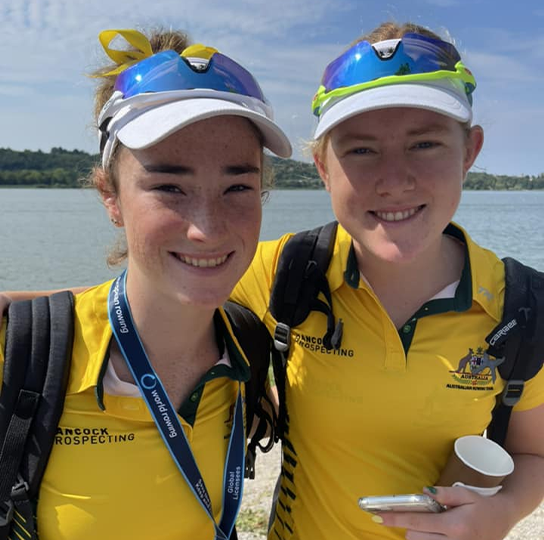
Nicki was my coach throughout my entire rowing journey at school, and she completely transformed the way I approached the sport. Her technical focus was next level, every session centred on quality over quantity. We constantly reviewed video footage, breaking down each stroke to make small but powerful improvements. She placed a big emphasis on controlling the controllables. From nutrition and recovery to mindset, ensuring we fuelled our bodies and trained smart. She was incredibly knowledgeable and supported each athlete's individual journey all the way to their peak performance.
Selected as stroke seat of Australian Under 19 Eight

Ratio Theory Rowing - Copyright . All rights reserved.
At Ratio Theory, we combine technical knowledge with strategic planning to help you gain back control, row faster, train smarter and perform at your best when it counts.